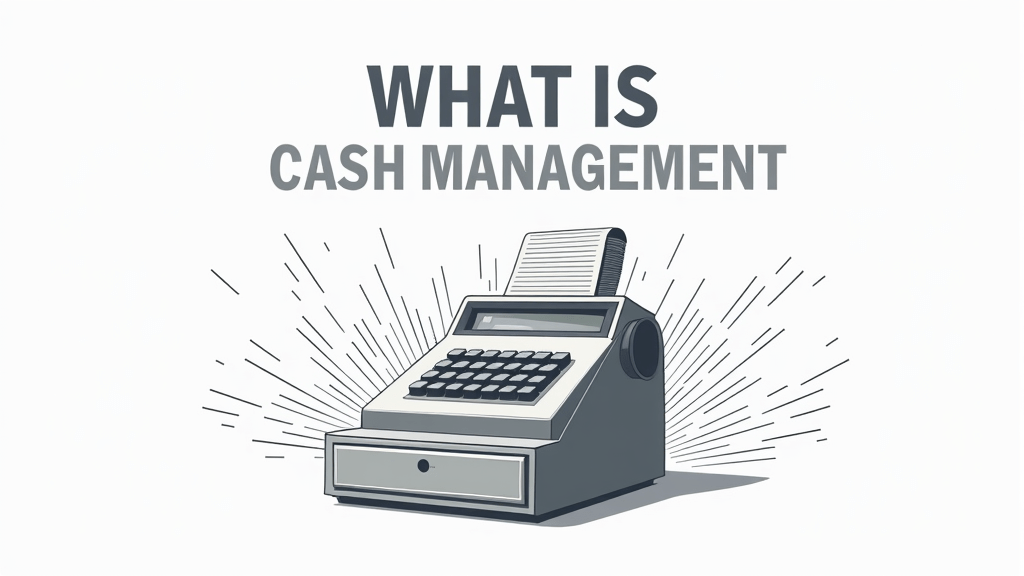
What Is Cash Management?
Table of Contents
- What is Cash Management?
- Importance of Cash Management for Businesses
- Cash Management for Individuals: Personal Finance Insights
- Technological Innovations in Cash Management
- Measuring Success: Key Performance Indicators (KPIs) in Cash Management
- Strategies for Effective Cash Management
- Cash Management Tools and Software
- Cash Management Techniques for Different Industries
- Tips for Optimizing Cash Management in Small Businesses
- Cash Management vs. Working Capital Management
- Cash Management Challenges and How to Overcome Them
- Conclusion: The Key to Successful Cash Management
What is Cash Management?
Cash management is a crucial aspect of financial planning for individuals and businesses alike. It involves effectively managing and optimizing cash flows to ensure liquidity, maximize returns, and minimize risks. By carefully monitoring and controlling the inflow and outflow of cash, organizations can improve their financial stability and make informed decisions.
In today’s rapidly changing and unpredictable business environment, Cash Management plays an even more significant role in sustaining operations and facilitating growth. It involves various activities, such as forecasting cash inflows and outflows, managing working capital, optimizing cash balances, and implementing effective payment and collection systems.
Prominent strategies and tools used in cash management include cash flow statements, cash budgets, cash pooling, and treasury management systems. These enable businesses to streamline their cash processes, reduce financial costs, and enhance overall profitability.
Whether you are an individual looking to effectively manage your personal finances or a business aiming to optimize cash flows, understanding the principles of cash management is essential. This article provides insights into cash management practices and techniques to help you achieve financial success and stability.br/>
Importance of Cash Management for Businesses
The importance of cash management for any business cannot be overstated. Liquidity is the lifeblood of all commercial endeavours. Ensuring that there is enough cash on hand to meet the operational needs, service debt, and invest in growth opportunities is foundational to any successful enterprise.
A business that masters the art of cash management can navigate the ebb and flow of market conditions with greater agility. It can take advantage of early payment discounts, negotiate better terms with suppliers, and respond more effectively to unexpected expenses. Conversely, poor cash management can lead to missed opportunities, strained relationships with vendors, and ultimately, financial insolvency.
Effective cash management also provides the transparency needed to make strategic decisions. When a business has a clear understanding of its cash position, it can more accurately forecast its financial future. This clarity allows for proactive adjustments to business strategies, ensuring that the organization remains on a path to long-term success.
Cash Management for Individuals: Personal Finance Insights
While often discussed in a business context, the principles of cash management are equally vital for individuals striving for personal financial stability and growth. Effective personal cash management involves understanding your income, tracking expenses, building savings, and strategically managing debt. This foundational practice ensures you have enough liquidity for daily needs, can weather unexpected financial shocks, and progress towards long-term goals like retirement or purchasing a home. Mastering individual cash flow is the cornerstone of robust personal finance.
Key strategies for personal cash management include creating a realistic budget, establishing an emergency fund covering 3-6 months of living expenses, and automating savings. Prioritizing high-interest debt repayment and making informed investment decisions also fall under this umbrella. Utilizing personal finance apps and tools can simplify tracking and provide valuable insights into your spending habits, helping to optimize your individual cash flow for a secure financial future.
Technological Innovations in Cash Management
The landscape of cash management is continually evolving, driven by rapid technological advancements. Fintech innovations are transforming how businesses and individuals handle their finances, making processes more efficient, transparent, and secure. Artificial intelligence (AI) and machine learning (ML) are now integral to predictive analytics, enabling more accurate cash flow forecasting by analyzing vast datasets and identifying subtle patterns. This helps organizations anticipate liquidity needs and optimize investment decisions with greater precision.
Blockchain technology is also beginning to impact cash management, offering immutable ledgers and smart contracts that can streamline cross-border payments, reduce transaction costs, and enhance the security of financial transfers. Real-time payment systems are becoming more prevalent, allowing for instant settlement of transactions and providing businesses with immediate access to funds, significantly improving working capital efficiency. The integration of cloud-based treasury management systems further centralizes financial operations, providing a holistic view of global cash positions and facilitating better strategic decisions in a dynamic economic environment.
Measuring Success: Key Performance Indicators (KPIs) in Cash Management
To truly understand the effectiveness of cash management strategies, businesses must track specific Key Performance Indicators (KPIs). These metrics provide quantifiable insights into liquidity, efficiency, and overall financial health. One crucial KPI is the Cash Conversion Cycle (CCC), which measures the time it takes for a business to convert its investments in inventory and accounts payable into cash flows from sales. A shorter CCC indicates better cash management efficiency.
Other vital KPIs include Days Sales Outstanding (DSO), which reflects the average number of days it takes for a company to collect revenue after a sale, and Days Payable Outstanding (DPO), indicating the average number of days it takes for a company to pay its invoices. The Current Ratio (current assets / current liabilities) and Quick Ratio (current assets - inventory / current liabilities) are also essential for assessing short-term liquidity. Regularly monitoring these KPIs allows businesses to identify bottlenecks, refine cash management practices, and ensure sustained financial viability.
Cash Flow Forecasting and BudgetingA cornerstone of robust cash management is the practice of cash flow forecasting and budgeting. By projecting future cash flows, businesses can anticipate the timing and amount of incoming and outgoing funds. This foresight is vital for maintaining liquidity and avoiding cash shortages that could hamper operations.
The process involves meticulously analysing historical cash flow patterns, accounting for seasonal fluctuations, and incorporating expected sales and expenses. The result is a cash flow forecast that serves as a roadmap for financial planning. It helps businesses to plan for capital expenditures, debt repayments, and investments in growth.
Budgeting complements forecasting by setting financial targets and limits. It involves allocating resources to various business activities and establishing benchmarks against which actual performance can be measured. A well-constructed budget keeps spending in check and aligns financial outlays with strategic priorities.
Strategies for Effective Cash Management
To manage cash effectively, businesses must adopt a multifaceted approach that encompasses various strategies tailored to their unique needs. One such strategy is actively managing accounts receivable. This includes setting clear payment terms, offering incentives for early payments, and implementing efficient billing processes to speed up cash collection.
On the other side of the ledger, managing accounts payable is equally important. This entails negotiating favourable payment terms with suppliers, taking advantage of payment discounts where possible, and scheduling payments to maintain a healthy cash balance without incurring late fees or damaging creditworthiness.
Another strategic move is optimizing inventory levels. Holding too much inventory ties up cash, while too little can lead to stockouts and lost sales. Effective inventory management ensures that a business can meet customer demand without unnecessary cash being tied up in unsold goods.
Cash Management Tools and Software
In the digital age, a plethora of tools and software solutions exist to simplify and enhance cash management. These tools provide real-time data and analytics, automate routine financial processes, and offer insights into cash flow trends.
Treasury management systems (TMS) are among the most comprehensive solutions available, offering a centralized platform for managing cash, investments, and other financial activities. They often include functionalities like cash positioning, bank reconciliation, and risk management, which are invaluable for larger organizations.
For smaller businesses, simpler cash management software might suffice. These tools can help with invoice creation, payment processing, and basic cash flow analysis. They are generally user-friendly and less costly than full-scale TMS solutions, making them accessible for businesses of all sizes.
Cash Management Techniques for Different Industries
Cash management is not a one-size-fits-all discipline. Different industries face unique cash flow challenges and opportunities, necessitating tailored cash management techniques.
For example, the retail industry often deals with high transaction volumes and seasonal sales patterns. Retailers must be adept at adjusting their cash management practices to accommodate these fluctuations, such as by employing temporary staff during peak seasons or negotiating flexible payment terms with suppliers.
In contrast, the construction industry typically deals with long-term projects and staggered payments. Construction firms must be skilled at forecasting long-term cash flows and managing the timing of payments and receipts to maintain liquidity throughout the duration of a project.
Tips for Optimizing Cash Management in Small Businesses
Small businesses, with their limited resources, need to be particularly strategic about cash management. One key tip is to stay on top of invoicing. Prompt and accurate billing ensures that cash inflows are as quick as possible. Leveraging online invoicing platforms can speed up this process and make it more efficient.
Another tip is to scrutinize every expense. Small businesses should regularly review their expenses and eliminate any that do not contribute to the company’s growth or operational efficiency. This can free up cash for more critical uses.
Establishing a contingency fund is also vital. Unexpected expenses can arise, and having a reserve of cash can prevent these from destabilizing the business.
Cash Management vs. Working Capital Management
It’s important to distinguish between cash management and working capital management, although they are related concepts. Cash management is specifically concerned with optimizing the flow of cash in and out of the business, ensuring liquidity, and maximizing the return on any cash surpluses.
Working capital management, on the other hand, is broader. It encompasses the management of all aspects of both current assets and current liabilities. This includes inventories, accounts receivable and payable, and cash. Effective working capital management ensures that a business can meet its short-term obligations and continue operations without the need for external funding.
Both are critical for maintaining the financial health of a company, but cash management is more focused on the immediate availability of funds.
Cash Management Challenges and How to Overcome Them
Many businesses face challenges when it comes to cash management. One of the most common is inadequate cash flow forecasting, which can lead to cash shortages. To overcome this, businesses must invest time in developing accurate and detailed forecasts, and regularly review and adjust them as needed.
Another challenge is the inefficient collection of receivables. Implementing stricter credit policies, offering various payment options, and using automated reminder systems can help to mitigate this issue.
Lastly, businesses often struggle with maintaining the discipline required for effective cash management. It’s crucial to create a culture of cash consciousness within the organization where every expenditure is scrutinized, and the value for money is always considered.
Conclusion: The Key to Successful Cash Management
In conclusion, cash management is an indispensable component of a healthy financial strategy for both individuals and businesses. It requires a blend of accurate forecasting, budgeting discipline, strategic planning, and the right tools to manage cash flows effectively.
By understanding and implementing the principles of cash management, businesses can ensure liquidity, reduce financial risk, and position themselves for sustainable growth. In today’s competitive and unpredictable business landscape, mastering cash management could very well be the differentiator between success and failure.
Those who prioritize and skillfully manage their cash resources are more likely to navigate through financial uncertainties and emerge as leaders in their respective industries. The key to successful cash management lies in continuous learning, adapting to new challenges, and employing the best practices and technologies available.