What Is Industrial Management?
Table of Contents
- What is Industrial Management?
- Key Principles of Industrial Management
- The Future of Industrial Management: Embracing Industry 4.0 and Beyond
- Career Path in Industrial Management: Opportunities and Growth
- Essential Tools and Technologies for Modern Industrial Management
- Roles and Responsibilities of an Industrial Manager
- Skills Required for Effective Industrial Management
- Challenges Faced in Industrial Management
- Industrial Management Techniques and Strategies
- Implementing Industrial Management in Different Industries
- Industrial Management Case Studies
- Conclusion: The Future of Industrial Management
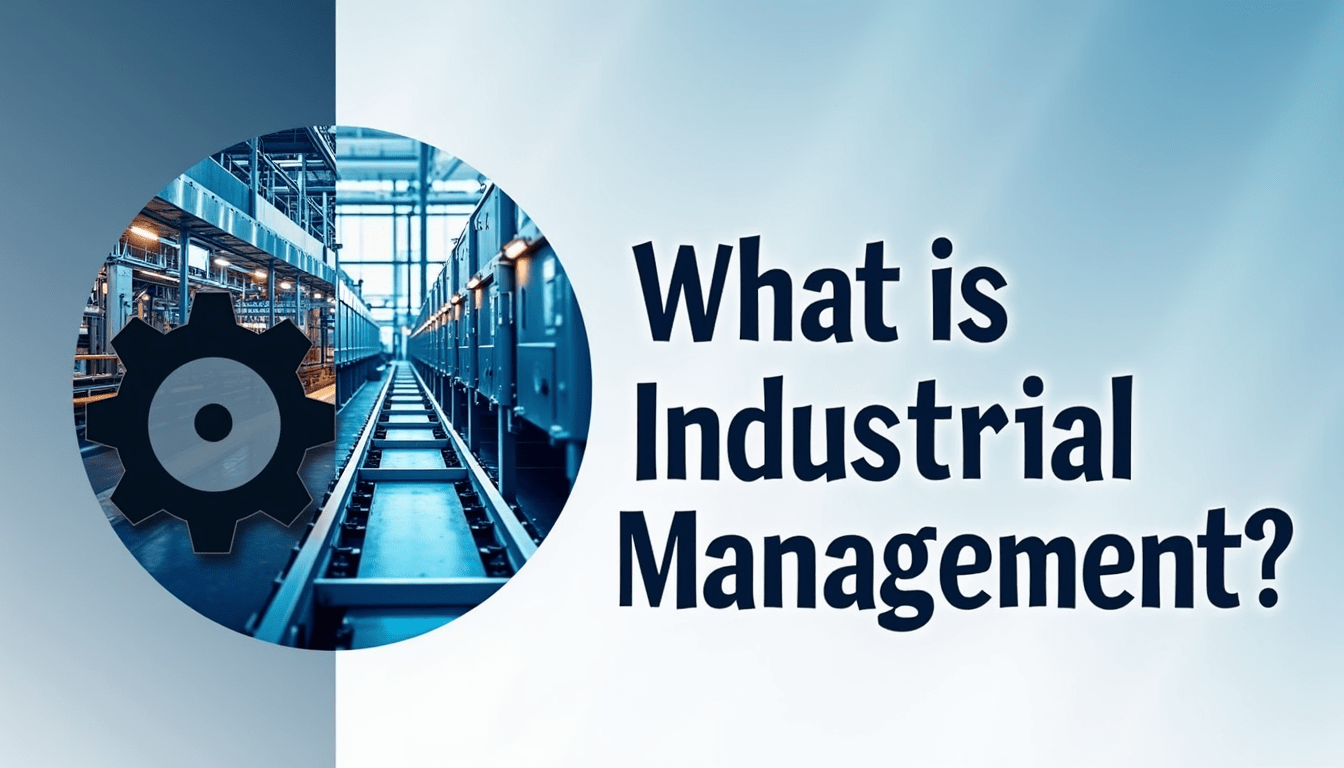
What is Industrial Management?
Industrial management is a vital aspect of any business, encompassing various strategies and techniques aimed at optimizing productivity and ensuring smooth operations within the manufacturing sector. From overseeing production processes to managing resources and coordinating teams, Industrial Management plays a crucial role in driving efficiency and profitability. By implementing effective management practices, companies can streamline workflows, enhance product quality, minimize costs, and meet customer expectations.
In today’s fast-paced and competitive business environment, industrial management has become even more critical. With advancements in technology and increasing globalization, industrial managers must adapt to ever-evolving challenges and trends. This involves staying updated with the latest innovations, leveraging data analytics, and implementing sustainable practices.
Whether you’re an aspiring industrial manager or a business owner looking to enhance your operations, understanding the principles and strategies of industrial management is essential. This article will delve into the various aspects of industrial management, exploring key concepts, best practices, and real-world examples. By the end, you’ll have a comprehensive understanding of what industrial management entails and how it can drive success in today’s dynamic business landscape.
Key Principles of Industrial Management
The cornerstone of any successful industrial management system is its foundational principles. These guiding tenets provide a framework for decision-making and operations within the industrial sector. One of the primary principles is efficiency, which refers to the optimal use of resources to yield the maximum output. Industrial managers strive to eliminate waste in processes, whether it’s in time, materials, or energy.
Another key principle is effectiveness, which focuses on achieving the desired outcomes. This means not just doing things right but doing the right things. An effective industrial manager ensures that all efforts contribute to the overarching goals of the organization, such as improving product quality or increasing market share.
Quality management is also a central principle of industrial management. It involves a continuous process of detecting and reducing or eliminating errors in manufacturing, streamlining supply chain management, improving the customer experience, and ensuring that employees are up to speed with training. Quality management systems, such as Total Quality Management (TQM), are often implemented to foster an environment of continuous improvement.
The Future of Industrial Management: Embracing Industry 4.0 and Beyond
Industrial management is rapidly evolving, driven by the Fourth Industrial Revolution, or Industry 4.0. This transformation integrates advanced technologies into manufacturing and operations, promising unprecedented efficiency and innovation. Understanding these shifts is crucial for staying competitive and driving future success.
Key pillars of this future include:
- Internet of Things (IoT): Connected devices and sensors provide real-time data, enabling proactive maintenance and optimized resource allocation.
- Artificial Intelligence (AI) & Machine Learning (ML): Used for predictive analytics, quality control, demand forecasting, and automating complex decision-making processes.
- Automation & Robotics: Enhancing precision, speed, and safety in production lines, from assembly to material handling.
- Big Data Analytics: Processing vast amounts of operational data to identify patterns, improve processes, and inform strategic decisions.
- Cloud Computing: Providing scalable infrastructure for data storage, processing, and application deployment, facilitating remote management and collaboration.
- Sustainability & Green Manufacturing: Increasing focus on eco-friendly practices, energy efficiency, and waste reduction throughout the supply chain.
Embracing these technologies allows industrial managers to create smart factories, improve responsiveness, and build more resilient and sustainable operations for the decades to come.
Career Path in Industrial Management: Opportunities and Growth
A career in industrial management offers diverse and rewarding opportunities for individuals passionate about optimizing operations and driving efficiency. This field is essential across various sectors, creating a stable demand for skilled professionals.
Educational Background
Most industrial management professionals hold a bachelor's degree in industrial engineering, business administration, operations management, or a related field. Advanced degrees, such as an MBA with a concentration in operations or a master's in industrial engineering, can accelerate career progression into leadership roles.
Typical Roles and Progression
Entry-level positions often include roles like Production Supervisor, Operations Analyst, or Junior Project Manager. With experience and further education, individuals can advance to:
- Industrial Manager: Oversees daily production, manages teams, and ensures efficiency.
- Plant Manager: Responsible for the entire facility's operations, budget, and strategic goals.
- Operations Director: Manages multiple plants or broader operational strategies within an organization.
- Supply Chain Manager: Focuses on optimizing the flow of goods, services, and information from raw materials to end-consumers.
- Consultant: Advises various companies on improving their industrial processes and efficiency.
Salary and Outlook
The demand for industrial managers remains strong as companies continuously seek to improve productivity and reduce costs. Salaries vary significantly based on experience, education, industry, and location, but generally offer competitive compensation with substantial growth potential for those who excel in leadership, problem-solving, and technological adaptation.
Essential Tools and Technologies for Modern Industrial Management
Effective industrial management relies heavily on a suite of sophisticated tools and technologies designed to streamline processes, enhance decision-making, and boost overall productivity. Leveraging these technologies is crucial for managers navigating today's complex manufacturing landscapes.
- Enterprise Resource Planning (ERP) Systems: These integrated software suites manage all core business processes, from finance and HR to manufacturing and supply chain, providing a unified view of operations.
- Manufacturing Execution Systems (MES): MES monitors and controls work in progress on the factory floor, tracking production status, performance, and quality in real-time.
- Supervisory Control and Data Acquisition (SCADA): Used for controlling industrial processes locally or remotely, SCADA collects, processes, and visualizes real-time data from equipment and machinery.
- Product Lifecycle Management (PLM) Software: PLM manages a product's entire lifecycle from conception, through design and manufacturing, to service and disposal, facilitating collaboration and data management.
- Computer-Aided Design (CAD) & Computer-Aided Manufacturing (CAM): CAD software aids in product design, while CAM uses these designs to control manufacturing machinery, ensuring precision and efficiency.
- Predictive Analytics & AI/ML Platforms: These tools analyze historical and real-time data to forecast future trends, predict equipment failures, optimize maintenance schedules, and improve decision-making.
- Collaborative Communication Tools: Platforms for project management, instant messaging, and video conferencing are vital for coordinating diverse teams across different locations, ensuring smooth information flow and problem-solving.
Adopting and integrating these technologies allows industrial managers to achieve higher levels of operational excellence, drive innovation, and maintain a competitive edge.
Importance of Industrial Management in BusinessIndustrial management is not just another cog in the wheel of business operations; it is the driving force that propels a company forward in the market. The judicious application of industrial management techniques can significantly impact a company’s bottom line. Effective management leads to enhanced productivity, which in turn can result in increased profitability.
Moreover, industrial management is crucial for maintaining competitive advantage. In an era where consumers demand high-quality products at lower prices, the ability to efficiently manage production and operation processes becomes paramount. It’s about finding the sweet spot between cost and quality, and consistently delivering value to customers.
Additionally, industrial management plays a pivotal role in risk management. By foreseeing potential issues in the production process and the supply chain, industrial managers can devise contingency plans to mitigate risks. This proactive approach ensures that the company can maintain smooth operations even in the face of unforeseen events.
Roles and Responsibilities of an Industrial Manager
An industrial manager holds a multifaceted role within an organization, responsible for overseeing the entire production process. One of their chief responsibilities is to plan, direct and coordinate the operations of the facilities and machines used in the production process. This includes the management of both people and materials, ensuring that everything is in place for production to run smoothly.
Another significant responsibility is to ensure that all safety regulations are followed. This includes both the safety of the workforce and the safe operation of equipment. Industrial managers must be vigilant in maintaining a safe work environment, which requires a thorough understanding of health and safety regulations.
Furthermore, an industrial manager is responsible for quality control. They must establish quality control standards and ensure that the production output meets these standards. This requires a deep understanding of the products being produced and the processes involved in their manufacturing.
Skills Required for Effective Industrial Management
Effective industrial management requires a varied skill set that encompasses both technical and interpersonal abilities. One of the essential skills is strategic planning. An industrial manager must be able to develop a clear and actionable plan that aligns with the company’s objectives, and also be flexible enough to adjust these plans in response to changing circumstances.
Leadership skills are also vital. Industrial managers must be able to motivate and guide their teams towards achieving production goals while fostering a culture of collaboration and continuous improvement. They need to be adept at conflict resolution and capable of making tough decisions when necessary.
In addition, a strong grasp of technology is increasingly important in industrial management. With the rise of Industry 4.0, managers need to be comfortable with data analysis, automation, and other technological tools that can be used to optimize production processes.
Challenges Faced in Industrial Management
The role of an industrial manager comes with its fair share of challenges. One of the most significant is adapting to technological changes. As new technologies emerge, managers must quickly learn to integrate these into existing systems without disrupting production. This requires continuous learning and an innovative mindset.
Another challenge is managing a diverse workforce. With the global nature of many businesses, industrial managers often have to navigate cultural differences and communication barriers to ensure cohesive team performance.
Moreover, environmental concerns have become a pressing challenge. Industrial managers must find ways to reduce the environmental impact of production processes while still maintaining efficiency and profitability. This often involves investing in sustainable technologies and practices, which can be costly in the short term.
Industrial Management Techniques and Strategies
To navigate the challenges of industrial management, there are several strategies and techniques that managers can employ. Lean manufacturing is one such strategy, which focuses on minimizing waste without sacrificing productivity. This involves analyzing every step in the production process and identifying areas where improvements can be made.
Another technique is the Six Sigma methodology, which aims to improve the quality of output by identifying and removing the causes of defects and minimizing variability in manufacturing and business processes. This data-driven approach is often complemented by the use of key performance indicators (KPIs) to measure progress and performance.
Supply chain management is also crucial. By optimizing the supply chain, industrial managers can reduce costs, enhance efficiency, and improve product quality. This requires a strategic approach to sourcing materials, managing inventory, and coordinating with suppliers and distributors.
Implementing Industrial Management in Different Industries
The principles of industrial management are not confined to any single industry; they are applicable across a broad spectrum of sectors. In the automotive industry, for instance, industrial management might focus on streamlining assembly line processes and integrating robotics to increase production speed and precision.
In the food and beverage industry, industrial managers might concentrate on maintaining strict quality control standards to ensure food safety and compliance with regulatory requirements. Here, efficient inventory management is also critical to ensure the freshness of ingredients and finished products.
The pharmaceutical industry presents unique challenges, such as stringent regulatory compliance and the need for absolute precision in production. Industrial management in this sector often involves the implementation of sophisticated tracking systems to monitor the production process from start to finish.
Industrial Management Case Studies
Real-world examples can provide valuable insights into the practical application of industrial management principles. One notable case study is the turnaround of a major automotive manufacturer that was facing declining sales and low productivity. By adopting lean manufacturing techniques and investing in employee training, the company was able to significantly improve its production processes and regain market share.
Another case study involves a large consumer electronics company that implemented Six Sigma methodologies to address quality control issues. By doing so, they reduced the defect rate in their products, which led to higher customer satisfaction and loyalty.
A third example is from the textile industry, where a company used supply chain management techniques to reduce costs and lead times. By building closer relationships with suppliers and optimizing their logistics network, the company was able to offer more competitive pricing and faster delivery to customers.
Conclusion: The Future of Industrial Management
As we look to the future, it is clear that industrial management will continue to evolve. The integration of artificial intelligence and machine learning in manufacturing processes will further enhance productivity and decision-making capabilities. Additionally, the push towards sustainability will drive innovation in resource management and process optimization.
The industrial manager of tomorrow will need to be even more adaptable, analytical, and technologically savvy. They will play a key role in shaping the future of manufacturing, ensuring that businesses can meet the demands of a rapidly changing world.
In conclusion, industrial management is a complex yet fascinating field that is critical to the success of modern businesses. By understanding its principles, challenges, and applications across various industries, one can appreciate the vital role it plays in driving operational excellence and strategic growth.