

What is Travel Management
Travel management is an essential aspect of efficient business operations, ensuring smooth and cost-effective travel arrangements for employees. Whether it’s booking flights, reserving accommodations, or organizing transportation, effective travel management streamlines the entire process to save time and money. In today’s globalized world, businesses of all sizes rely on travel management to navigate the complex world of business travel.
From small startups to multinational corporations, travel management plays a vital role in optimizing travel experiences. It involves strategic planning, negotiation with vendors, and implementing policies that align with business objectives. With the right travel management solution, organizations can improve traveler experience, increase compliance with travel policies, and gain access to comprehensive reporting and data analytics.
Whether it’s minimizing travel expenses or enhancing traveler safety, travel management is a multifaceted discipline that requires expertise and attention to detail. By partnering with travel management companies or implementing sophisticated software solutions, businesses can streamline their travel processes and focus on what truly matters – growing their business.
In this article, we will delve deeper into the world of travel management, exploring its role in modern business and uncovering the strategies that can help organizations optimize their travel programs. So, let’s embark on this journey together and discover the secrets of effective travel management.
The Importance of Travel Management for Businesses
The significance of travel management cannot be overstated in the context of contemporary business operations. As companies expand their reach across borders, the need to travel for client meetings, conferences, and site visits has escalated. Travel management becomes the linchpin in ensuring these activities happen seamlessly.
Effective travel management goes beyond merely booking transport and lodgings; it encompasses a holistic approach to managing a company’s travel needs. This includes understanding the intricate details of travel policies, the nuances of international travel regulations, and managing the unforeseen challenges that can arise while employees are away from the office.
Moreover, in an era where cost efficiency is paramount, travel management offers businesses the opportunity to control and reduce travel expenses. By analyzing travel spend and behavior, companies can make informed decisions that contribute to significant savings, while also ensuring the safety and comfort of their employees.
How to Choose the Right Travel Management Solution for Your Business
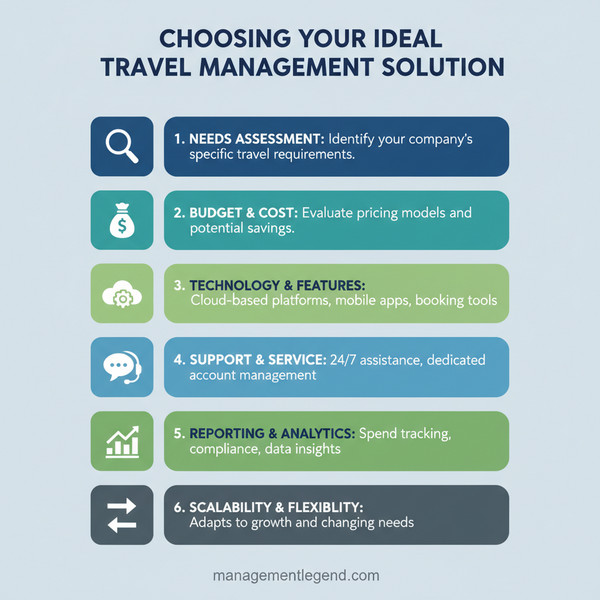
Selecting the optimal travel management solution is a critical decision that impacts efficiency, cost savings, and traveler satisfaction. With a myriad of options available, from dedicated travel management companies (TMCs) to sophisticated software platforms, businesses must carefully evaluate their unique needs. This process involves a thorough assessment of current travel volume, budget constraints, desired level of automation, and specific compliance requirements. The right solution should not only streamline booking and expense processes but also align with your organizational culture and growth trajectory.
Consider factors such as user-friendliness for employees, comprehensive reporting capabilities for finance teams, and robust support for unexpected travel disruptions. A tailored approach ensures that your investment yields maximum returns, providing a seamless and secure travel experience for your workforce while maintaining fiscal responsibility. The infographic below outlines key considerations to guide your decision-making process.
Measuring Success: Key Performance Indicators for Travel Management
To truly understand the effectiveness of your travel management strategy, it’s essential to establish and monitor key performance indicators (KPIs). These metrics provide quantifiable insights into spending, efficiency, compliance, and traveler satisfaction, allowing businesses to make data-driven decisions and continuously optimize their programs. Without clear KPIs, it’s challenging to assess return on investment or identify areas for improvement.
Key KPIs often include Cost Savings Achieved (e.g., year-over-year reduction in travel spend, savings from negotiated rates), Policy Compliance Rate (percentage of bookings adhering to corporate travel policies), Average Approval Time for travel requests, and Traveler Satisfaction Scores (gathered via surveys). Additionally, monitoring Supplier Performance (on-time flights, hotel service quality) and even Carbon Footprint Reduction initiatives can offer a holistic view of your travel program’s impact. Regular review of these indicators empowers organizations to refine strategies, enhance traveler experience, and ensure fiscal prudence.
Travel Management for Different Business Sizes: Tailored Approaches
The scope and complexity of travel management vary significantly depending on the size and nature of a business. What works for a startup with infrequent travel may be wholly inadequate for a multinational corporation with a global footprint. Understanding these distinctions is crucial for implementing a travel management strategy that is both effective and scalable.
For Small Businesses and Startups, the focus is often on simplicity, cost control, and ease of use. They might prioritize online booking tools with built-in policy enforcement and basic expense reporting features. Flexibility and minimal commitment are key, often leveraging smaller travel agencies or self-service platforms. The goal is to manage essential travel without significant overhead.
Medium to Large Enterprises, conversely, require more robust and integrated solutions. Their needs extend to complex policy frameworks, global vendor negotiations, advanced analytics, duty of care responsibilities, and comprehensive emergency support. They often partner with full-service Travel Management Companies (TMCs) or implement sophisticated enterprise-grade software to handle high volumes, diverse travel patterns, and intricate compliance requirements across various departments and geographies. The strategy here emphasizes optimization, deep insights, and a seamless experience for a larger, more varied traveler base.
Key Components of Travel Management
Travel management is made up of several core components, each playing a critical role in the overall efficacy of a company’s travel operations. Firstly, policy development is fundamental. A well-crafted travel policy provides a framework for booking, compliance, and expense control.
Next, vendor negotiations and relationships are integral to securing cost-effective arrangements. This involves liaising with airlines, hotels, and transport providers to negotiate rates and terms that are favorable for the business. These relationships can also offer added flexibility and amenities for travelers.
Lastly, the implementation of technology plays a vital role. The use of sophisticated travel management software can automate many aspects of the process, from booking to expense reporting, which streamlines operations and provides real-time data and insights.
Benefits of Implementing a Travel Management System
Introducing a travel management system brings a multitude of benefits. Primarily, it offers improved efficiency through the automation of booking processes and expense reporting, thereby saving time for travelers and the company’s administration team.
Additionally, a robust system enhances policy compliance. With built-in rules and restrictions, employees are more likely to adhere to corporate travel policies, which in turn helps to manage costs and reduce the risk of overspending.
The data analytics capabilities of a travel management system are invaluable. By providing detailed reports on travel spend and trends, businesses can identify savings opportunities and make data-driven decisions to optimize their travel programs.
Common Challenges in Travel Management
Despite the advantages, travel management can present several challenges. One of the primary issues is the complexity of travel arrangements, especially when dealing with international destinations that have differing regulations and requirements.
Another challenge is ensuring employee compliance with travel policies. Without a robust system or clear communication, employees may book out of policy, leading to increased costs and administrative headaches.
Additionally, managing the unexpected, such as travel disruptions, health crises, or security concerns, requires a proactive and responsive approach. Travel managers must be equipped to handle these situations to minimize their impact on the traveler and the company.
Tips for Effective Travel Management
To overcome the hurdles of travel management, there are several strategies businesses can adopt. First and foremost, clear and regular communication of travel policies is essential. This ensures that all employees are aware of the guidelines and the reasoning behind them.
Secondly, investing in training for both travel managers and employees can pay dividends. Understanding how to use travel management systems and what to do in various travel-related scenarios can lead to smoother operations.
Lastly, always have a contingency plan. Whether it’s dealing with natural disasters or sudden changes in travel advisories, having a well-thought-out plan can help mitigate risks and reduce stress for traveling employees.

Tools and Software for Travel Management
In today’s digital age, there is a plethora of tools and software designed to aid in travel management. These range from online booking tools that integrate with travel policies to expense management software that simplifies the process of tracking and reporting travel spend.
Travel management platforms also often include mobile applications, which allow travelers to manage their itineraries on the go, and provide travel managers with the ability to track and communicate with employees in real-time.
Moreover, advanced analytics tools give businesses the power to dissect vast amounts of travel data, helping to identify trends, negotiate better rates, and customize travel programs to meet the unique needs of the organization.
Best Practices for Travel Booking and Expense Management
When it comes to booking travel and managing expenses, there are several best practices that can ensure efficiency and cost savings. Centralizing the booking process through a single platform can provide better visibility and control over travel spend.
Leveraging negotiated rates and preferred vendor programs is also a smart move. Consistently booking with preferred providers can lead to loyalty discounts and special perks for travelers.
For expense management, implementing a system that allows for electronic receipt capture and automatic expense report generation can significantly reduce administrative burdens and improve accuracy.
The Role of Travel Management Companies
Travel management companies (TMCs) offer specialized services that can greatly assist businesses in managing their travel needs. These companies provide expert knowledge, resources, and technology that many organizations may not have in-house.
TMCs can take on the heavy lifting of travel arrangements, policy enforcement, and emergency support, freeing up internal resources. They also bring the advantage of bulk buying power and industry relationships, which can translate to substantial cost savings.
Furthermore, TMCs often have access to exclusive travel inventory and advanced analytics tools, providing businesses with options and insights they might not otherwise have.
Conclusion: The Future of Travel Management
As we look to the future, travel management is poised to become even more integral to business success. With advancements in technology, we can anticipate more sophisticated travel management systems that offer greater customization, predictive analytics, and integrated traveler support.
Sustainability is also set to play a key role in shaping travel management practices. Businesses are now more conscious of their environmental impact and are seeking travel solutions that are not only cost-effective but also environmentally responsible.
With a growing emphasis on traveler well-being and safety, travel management is expanding its remit to ensure that employees are supported and cared for throughout their journeys. The future of travel management is about creating seamless, safe, and sustainable travel experiences that align with overarching business goals.
In conclusion, effective travel management is crucial for any business looking to make the most of its travel initiatives. By understanding the components, benefits, and best practices of travel management, companies can position themselves to reap the rewards of a well-managed travel program that contributes to their success and growth.