

What is Cost Management
Cost management is a crucial aspect of any business, helping organizations effectively allocate and utilize their financial resources. By carefully planning, tracking, and controlling expenses, companies can enhance profitability and maintain a competitive edge in the market. In a nutshell, cost management involves the identification, analysis, and management of all costs associated with a business operation. This includes everything from materials and labor to overhead expenses and budgeting.
Effective cost management allows businesses to make informed decisions, optimize spending, and drive financial performance. It involves strategic budgeting, monitoring expenses, and implementing cost-saving initiatives. With the ever-changing economic landscape and increasing competition, it has become imperative for businesses to adopt efficient cost management practices to survive and thrive.
In this article, we will delve deeper into the concept of cost management, explore its significance, and discuss some effective strategies for implementing it in your organization. Whether you are a small business owner or a finance professional, understanding cost management is crucial for long-term success. So, let’s dive in and unlock the secrets of effective cost management!
Understanding Cost Management
Cost management is the process of planning and controlling the budget of a business or project. It is a systematic approach to forecasting expenditures and revenues, assessing risk, and ensuring that financial resources are used in the most efficient manner.
The essence of cost management lies in its ability to provide a detailed breakdown of all costs, thereby enabling managers to understand where money is being spent and how it can be better utilized. It involves collecting data, analyzing it, and making strategic decisions to minimize costs while maximizing value.
This approach encompasses various financial aspects such as direct costs, which relate to the production of goods or services, and indirect costs, such as administrative expenses. The objective is not merely to cut costs but to optimize them in a way that supports the strategic goals of the organization.
Challenges and Common Pitfalls in Cost Management
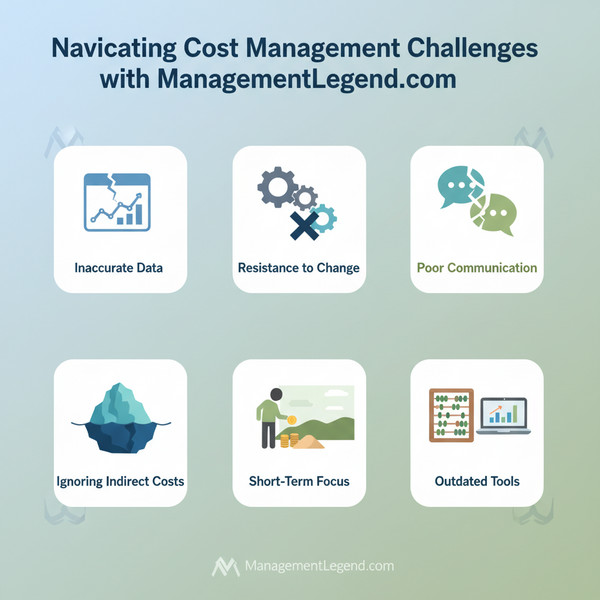
Even with the best intentions, organizations often encounter obstacles when striving for effective cost management. Understanding these common challenges is the first step towards overcoming them and building a more resilient financial strategy.
- Inaccurate Data & Forecasting: Relying on flawed or outdated financial data can lead to misguided decisions and budgets that don’t reflect reality. Precise data collection and robust forecasting are essential for informed strategic planning.
- Resistance to Change: Employees and departments may resist new cost-saving measures or process adjustments, fearing job security impacts or increased workload. Effective communication and stakeholder buy-in are crucial for smooth transitions.
- Poor Communication & Siloed Information: A lack of transparency or fragmented information across departments can prevent a holistic view of costs. Integrating systems and fostering cross-departmental collaboration improves overall cost visibility.
- Ignoring Indirect Costs: Many businesses focus heavily on direct costs while overlooking significant indirect expenses like administrative overhead, utilities, or maintenance. These ‘hidden’ costs can erode profits if not actively managed.
- Short-Term Focus: An exclusive focus on immediate cost cutting without considering long-term strategic goals can lead to sacrificing quality, innovation, or future growth opportunities. Sustainable cost management balances present needs with future vision.
- Inadequate Tools & Technology: Manual processes or outdated software can hinder efficient cost tracking, analysis, and reporting, making it difficult to gain real-time insights and implement timely adjustments. Investing in appropriate cost management software is vital.
By proactively addressing these common pitfalls, businesses can strengthen their cost management framework and achieve more sustainable financial health.
A Step-by-Step Guide to Implementing Effective Cost Management
Implementing a robust cost management system doesn’t have to be overwhelming. By following a structured approach, organizations can systematically identify, analyze, and control their expenditures to drive greater financial efficiency and profitability. Here’s a practical, step-by-step guide:
- Define Clear Financial Objectives: Before initiating any cost management efforts, establish specific, measurable, achievable, relevant, and time-bound (SMART) financial goals. Are you aiming to reduce operational costs by 10%, improve profit margins, or allocate more funds to R&D?
- Analyze Current Costs & Spending: Conduct a comprehensive audit of all existing expenditures. Categorize costs (e.g., direct, indirect, fixed, variable) and identify where money is currently being spent. This forms the baseline for future comparisons and identifies areas for potential savings.
- Develop a Detailed Budget: Based on your objectives and current cost analysis, create a realistic and flexible budget. This serves as a financial roadmap, allocating resources efficiently and setting boundaries for departmental spending. Ensure all key stakeholders are involved in this process.
- Implement Monitoring & Tracking Systems: Establish continuous processes and tools for tracking actual spending against the budget. Utilize financial software, ERP systems, or project management tools to monitor expenses in real-time, allowing for immediate identification of deviations.
- Identify & Prioritize Cost-Saving Opportunities: Brainstorm and evaluate potential areas for cost reduction. This could involve negotiating better deals with suppliers, optimizing operational processes, reducing waste, or leveraging technology. Prioritize initiatives based on potential impact and feasibility.
- Execute Cost Reduction Strategies: Put your chosen cost-saving initiatives into action. This may involve implementing new policies, negotiating contracts, adopting new technologies, or training staff on more efficient practices. Clear communication is key during this phase.
- Regular Review, Analysis & Adjustment: Cost management is an ongoing process. Regularly review performance against your budget and objectives. Analyze variances, assess the effectiveness of implemented strategies, and make necessary adjustments to ensure continuous improvement and adaptation to changing market conditions.
By diligently following these steps, businesses can foster a culture of financial accountability and achieve sustainable cost efficiency.
Real-World Examples of Successful Cost Management
Understanding the theory of cost management is one thing; seeing it in action provides invaluable insight. Businesses across various sectors have leveraged effective cost management to significantly enhance their financial performance and competitive edge.
Manufacturing Industry: Supply Chain Optimization
A mid-sized automotive parts manufacturer faced rising material costs and production inefficiencies. By implementing activity-based costing (ABC), they identified that a significant portion of their overhead was tied to managing a vast number of low-volume suppliers. Through a strategic vendor consolidation initiative, negotiating bulk discounts, and streamlining their logistics, they reduced material costs by 12% and cut inventory carrying costs by 8%, directly improving their profit margins.
Service Sector: Technology-Driven Efficiency
A rapidly growing customer service call center struggled with high operational costs due to extensive manual processes and a large workforce. They invested in an AI-powered chatbot and automated routing system. This allowed them to handle routine inquiries without human intervention, reducing the need for additional staff and freeing up agents to focus on complex issues. The result was a 15% reduction in labor costs per inquiry and improved customer satisfaction due to faster resolution times.
Construction & Project Management: Lean Project Principles
A construction firm specializing in commercial buildings adopted lean project management principles. They implemented strict project budgeting software, real-time expense tracking, and regular subcontractor performance reviews. By meticulously planning material procurement, minimizing waste on-site, and optimizing equipment utilization, they reduced project overruns by 20% and completed projects 10% faster than industry averages, bolstering their reputation and client trust.
These examples illustrate that successful cost management isn’t just about cutting expenses indiscriminately; it’s about strategic decision-making, process optimization, and leveraging the right tools to achieve greater efficiency and long-term value.
Importance of Cost Management
Cost management is paramount for the survival and growth of any enterprise. It directly impacts the profitability of a company by helping it to reduce waste and avoid unnecessary expenses.
In today’s competitive business environment, firms must be able to adapt to market changes rapidly. Effective cost management equips them with the agility to adjust their strategies and operations to remain viable. It also aids in pricing strategies, ensuring that products and services are offered at competitive rates without eroding profit margins.
Moreover, proper cost management is essential for long-term planning and sustainability. It enables businesses to forecast financial outcomes, prepare for future investment, and ensure they have adequate capital to take advantage of new opportunities as they arise.
Key Principles of Cost Management
The foundation of robust cost management lies in adherence to its key principles. The first principle is accuracy, which involves ensuring that all financial data is correct and up-to-date. Without accurate data, any cost management efforts may be misguided.
The second principle is consistency, which relates to the regular monitoring and reporting of costs. This helps in comparing performance over time and against industry benchmarks.
Transparency is the third principle, which underscores the need for clear and comprehensible financial reporting. Transparency enables stakeholders to understand how resources are being allocated and for what purpose.
Cost Management Techniques
Various techniques are employed by businesses to manage costs effectively. One such technique is life-cycle costing, which considers the total cost of ownership of an asset, including acquisition, operation, and disposal costs.
Another common technique is target costing, where a product’s selling price is used as the basis for determining the costs that can be incurred in its production, thereby ensuring profitability.
Activity-based costing (ABC) is yet another technique that allocates overhead costs to specific activities, providing a more accurate depiction of the true cost of production and identifying opportunities for cost savings.
Cost Management vs Cost Control
While cost management and cost control are often used interchangeably, they are distinct concepts. Cost management is a more comprehensive approach that encompasses planning, estimating, budgeting, and controlling costs, ensuring they align with strategic objectives.
Cost control, on the other hand, is more focused on monitoring and regulating the costs within the parameters of the established budget. It is a subset of cost management, concerned primarily with keeping costs in check and preventing overruns.
The integration of both cost management and cost control is vital for efficient financial stewardship, as it allows for a proactive approach to managing costs while also setting mechanisms to keep them within predetermined boundaries.
Cost Management in Different Industries
Cost management practices vary across industries due to differences in business models, regulatory environments, and production processes. In manufacturing, for instance, cost management focuses on material costs, labor, and overheads associated with the production line.
In the service industry, the emphasis is often on labor and operational costs, as these represent a significant portion of overall expenses. In construction, project cost management is critical, with attention given to the costs of materials, labor, equipment, and permits.
Each industry requires tailored cost management strategies that consider the unique aspects of its operations, market dynamics, and cost drivers to achieve financial efficiency and competitive advantage.
Benefits of Effective Cost Management
The benefits of effective cost management are manifold. It enhances the financial stability of a business, fostering confidence among investors, creditors, and other stakeholders.
It also contributes to better pricing strategies, allowing companies to offer competitive prices while maintaining healthy profit margins. Additionally, cost management helps in identifying and eliminating inefficiencies, leading to improved operational performance.
In the realm of strategic planning, robust cost management supports the alignment of financial resources with long-term goals, facilitating sustainable growth and innovation.
Implementing Cost Management Strategies
Implementing cost management strategies requires a structured approach, beginning with the formulation of clear financial objectives. Once these objectives are set, businesses need to establish a cost management plan that includes budgeting, forecasting, and cost reduction targets.
Engaging all levels of the organization in cost management efforts is also crucial. Employees should be aware of cost implications and encouraged to contribute ideas for cost-saving measures.
Regular review and adjustment of cost management strategies are necessary to ensure they remain relevant and effective in changing market conditions and as the business evolves.
Tools and Software for Cost Management
Advancements in technology have given rise to a plethora of tools and software designed to simplify cost management. These range from basic spreadsheet applications to sophisticated financial management systems that integrate with other business functions.
Project management software often includes cost management features, enabling project managers to track and control project expenses in real-time.
Moreover, cloud-based accounting platforms offer real-time financial data, budgeting tools, and analytical capabilities that facilitate proactive cost management.
Conclusion
Cost management is an indispensable element of successful business management. It is a multifaceted discipline that requires precision, strategic thinking, and continuous improvement. By employing effective cost management strategies, businesses can not only survive in a competitive market but also position themselves for long-term growth and profitability.
As we have explored, effective cost management is not a one-size-fits-all solution. It must be tailored to the specific needs and circumstances of an organization, incorporating a mix of techniques and principles.
With the right approach and tools, cost management can be a powerful lever for enhancing financial performance and achieving strategic objectives. It is an ongoing journey that demands attention, commitment, and a willingness to adapt. For forward-thinking enterprises, mastering cost management is not just about cutting costs; it’s about smart spending for a sustainable future.